Water-Based vs Solvent-Based Paver Sealer: Which to Use
Choose a water-based sealer if you want low fumes, easy cleanup, and a natural matte finish; choose a solvent-based sealer if you want the classic glossy “wet look” and the best resistance to oil and grease on a driveway. Which one wins depends on your priority, not on one type being universally “better” — the real VOC, gloss, and penetration numbers below differ by product and by what you need most.
Key takeaways
- Water-based sealers can have very low VOC content (one product spec: under 5 g/L) and a milder odor.
- Solvent-based sealers can have much higher VOC content (one product spec: 720 g/L) and give off strong fumes that require ventilation.
- Federal rules set VOC ceilings for these coating categories; some state and local rules are stricter.
- A paver manufacturer’s own comparison recommends solvent-based sealers specifically for oil and grease resistance.
- Solvent-based sealers generally penetrate deeper because the solvent carries dissolved solids further into the paver than water-based particles can travel.
What’s the real difference between the two?
Both water-based and solvent-based paver sealers do the same basic job: they sit on or in the paver surface to resist stains, water, and UV damage. The difference is the carrier that delivers the active ingredient. ICPI Tech Spec 5 explains the mechanism plainly: “Solvent based products carry the dissolved solids as deep as the solvent will penetrate into the concrete paver… Water based sealers penetrate concrete as far as the size of the particles will permit… These particles cannot penetrate as deeply as those carried by solvents.” That’s a genuinely neutral, technical explanation — not a sales claim from either side.
Western Interlock, a paver manufacturer that sells both types, summarizes the practical trade-off from its own comparison page: solvent-based sealers are “high in volatile organic compounds (VOCs)… have a strong odor” and produce “a glossy, wet-looking finish even after they have dried,” while water-based sealers are “low in VOCs… have a more mild odor” and give “a modern, matte finish.” For oil and grease protection specifically, the same source states “using a solvent-based sealer is also the best option,” while water-based is recommended when the priority is protecting against water and dirt while keeping the paver’s natural appearance.
The real VOC numbers
“Low VOC” and “high VOC” sound vague until you see actual numbers from real product data sheets:
- DryTreat Stain-Proof Waterbased Penetrating Sealer: VOC (calculated) under 5 g/L. The product spec also lists it as PFOA and PFOS-free, with a surface temperature application range of 40–95°F.
- H&C ULTRAPAVER Solvent-Based Florida Paver Sealer: VOC of 720 g/L, tested per EPA Method 24. It contains toluene, is flammable, and its label warns “VAPOR HARMFUL. Use only with adequate ventilation,” with a California Prop 65 warning for cancer and reproductive harm.
For context, the U.S. EPA’s National VOC Emission Standards for Architectural Coatings (40 CFR Part 59 Subpart D) set federal ceilings of 600 g/L for the “waterproofing sealers and treatments” category and 400 g/L for the general “sealers” category. Manufacturers must meet these limits, pay an EPA exceedance fee, or use a tonnage exemption to sell a product that exceeds them. Some state and regional air districts — California’s in particular — set stricter local limits than the federal floor. That’s the sourced, factual reason some solvent-based sealers are harder to find or cost more in certain states; it isn’t that they’re banned outright, just that they face a stricter compliance bar in those places.
The decision table by priority
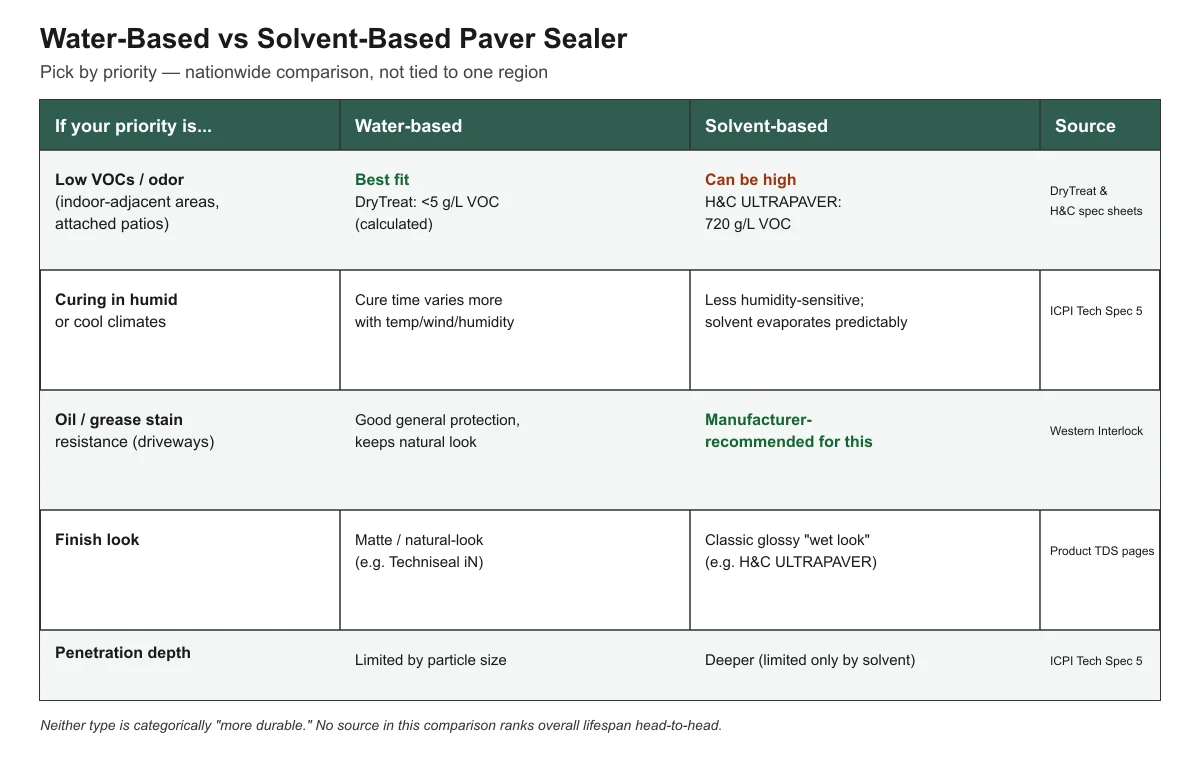
| Priority | Water-based | Solvent-based | Source |
|---|---|---|---|
| VOC / odor | Very low (DryTreat: <5 g/L) | Can be high (H&C: 720 g/L); check local VOC rules, especially CA | DryTreat, H&C spec sheets; EPA 40 CFR 59 |
| Climate / humidity for curing | Cure time varies more with temperature, wind, humidity | Less humidity-sensitive once applied; solvent evaporates predictably | ICPI Tech Spec 5 |
| Oil / driveway-stain resistance | Good general protection, preserves natural look | Manufacturer-recommended specifically for oil and grease | Western Interlock |
| Gloss preference | Matte / natural-look options common | Classic “wet look” gloss | Techniseal, H&C, Western Interlock |
| Penetration depth | Shallower (limited by particle size) | Deeper (limited only by solvent penetration) | ICPI Tech Spec 5 |
What about climate and humidity?
ICPI notes that water-based sealer curing time “will vary with the temperature, wind conditions and humidity” more than solvent-based products do, since water evaporates more slowly than solvent under humid or cool conditions. That doesn’t make water-based sealers unsuitable in humid climates — it just means you may need a longer dry-weather window after application, and should check your specific product’s recommended temperature range before applying. DryTreat’s own penetrating sealer, for example, specifies a 40–95°F application range.
Does one type last longer than the other?
No source we reviewed makes a head-to-head durability claim between the two categories. The only lifespan figure available is DryTreat’s own statement that its waterbased penetrating sealer lasts “approximately up to 5 years depending on surface use and traffic” — that’s a claim about one specific product, not a category-wide comparison. Treat any blog claiming one type categorically “lasts longer” as unverified unless it cites a real side-by-side test.
How to pick based on your situation
- Sealing an attached patio, covered porch, or anywhere fumes and odor are a concern? Start with a water-based option and confirm its VOC rating on the product’s own data sheet.
- Sealing a driveway that regularly sees motor oil or grease drips? A solvent-based sealer is the manufacturer-recommended choice for that specific resistance.
- Live somewhere with strict state or local VOC rules (California air districts, for example)? Check that your chosen solvent-based product is compliant or exempt before buying, since the federal ceiling isn’t the only rule that may apply.
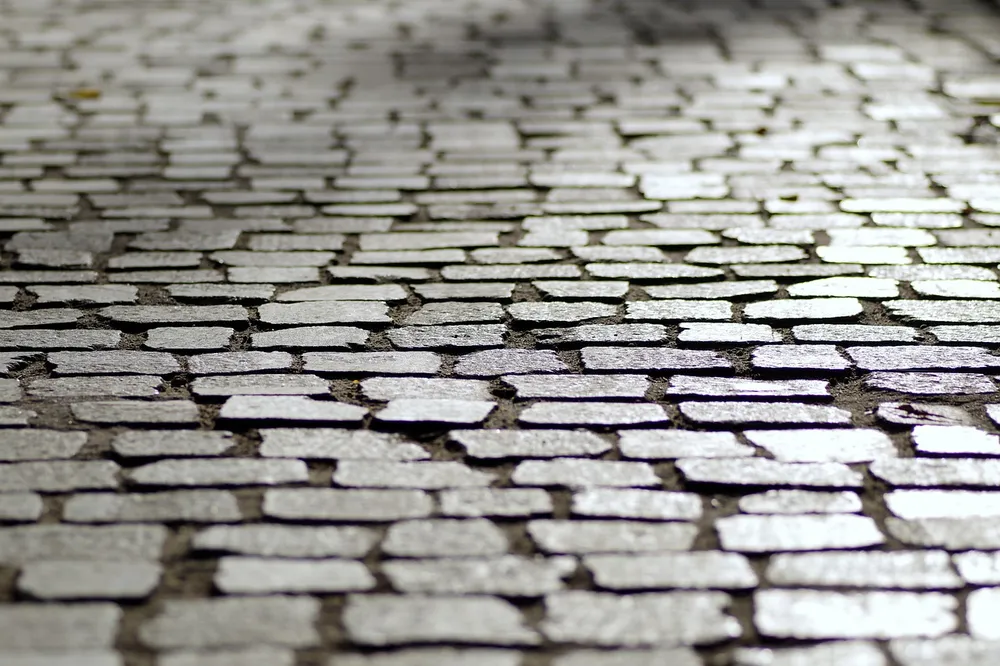
- Want the glossy “wet look”? That’s typically a solvent-based or acrylic film-forming sealer. Want to preserve the paver’s original, non-shiny appearance? Look at water-based or penetrating options instead. See our full comparison of wet look vs natural vs enhancer paver sealer for the finish-level detail.
Safety and handling
Whichever type you choose, solvent-based sealers in particular emit VOCs that require real ventilation. Work in an open or well-ventilated area, avoid use in confined or enclosed spaces, keep flame and sparks away from the work area while it’s wet and until vapors clear, and wear the gloves, eye protection, and respirator your product’s label recommends. These are standard, sourced precautions from ICPI’s technical bulletin and from the H&C product label, not an optional suggestion.
Where this fits into the full process
Once you’ve picked a sealer type, see our complete step-by-step guide to sealing pavers for application technique, coverage rates, and cure times by product. And because reapplication intervals can also differ somewhat by sealer chemistry, check how often you should reseal pavers once your sealer is down.
Frequently asked questions
Is solvent-based sealer illegal in some states?
No sealer type is outright illegal nationwide. The accurate framing is that solvent-based sealers must meet VOC content limits set by federal rule (40 CFR Part 59 Subpart D) or by stricter state and local air-district rules, or use a compliance exemption. Some states, especially California, enforce tighter limits than the federal floor, which can restrict which specific products are sold there.
Can I mix or switch between water-based and solvent-based sealers on the same pavers?
Manufacturer instructions generally require removing an unknown or incompatible prior coating before applying a new sealer. Don’t assume the two types are compatible with each other without checking your new product’s label — if your pavers already have an old sealer on them and you’re not sure what type it is, see our guide on paver sealer peeling or flaking, which covers incompatible-coating causes and fixes.
Which type is easier to apply myself?
Western Interlock notes that cleanup is easier with water-based sealers (soap and water) versus solvent-based sealers (which need the manufacturer’s recommended solvent for cleanup). Beyond cleanup, both types require similar prep: a clean, fully dry surface and the correct temperature range from the product’s data sheet.
Does a higher VOC number mean a better seal?
No sourced data ties VOC level to sealing performance. VOC content is a regulatory and health/safety measure of volatile solvent content, not a quality or durability rating.
Do I need a respirator for a water-based sealer too?
Water-based sealers generally have much lower VOC content and milder odor, but always check your specific product’s label for its own recommended protective equipment — “low VOC” doesn’t automatically mean “no precautions needed.”
Sources
- Interlocking Concrete Pavement Institute, Tech Spec 5: Cleaning, Sealing and Joint Sand Stabilization of Interlocking Concrete Pavement
- DryTreat, Stain-Proof Waterbased Penetrating Sealer Product Specification Sheet
- H&C Concrete, ULTRAPAVER Solvent-Based Florida Paver Sealer Product Data Sheet
- U.S. EPA, National Volatile Organic Compound Emission Standards for Architectural Coatings, 40 CFR Part 59 Subpart D
- Western Interlock, Water-Based or Solvent-Based Sealer: Which Should I Use for Pavers?
By paversealguide.com Editorial Team. Last updated: 2026-11-13.