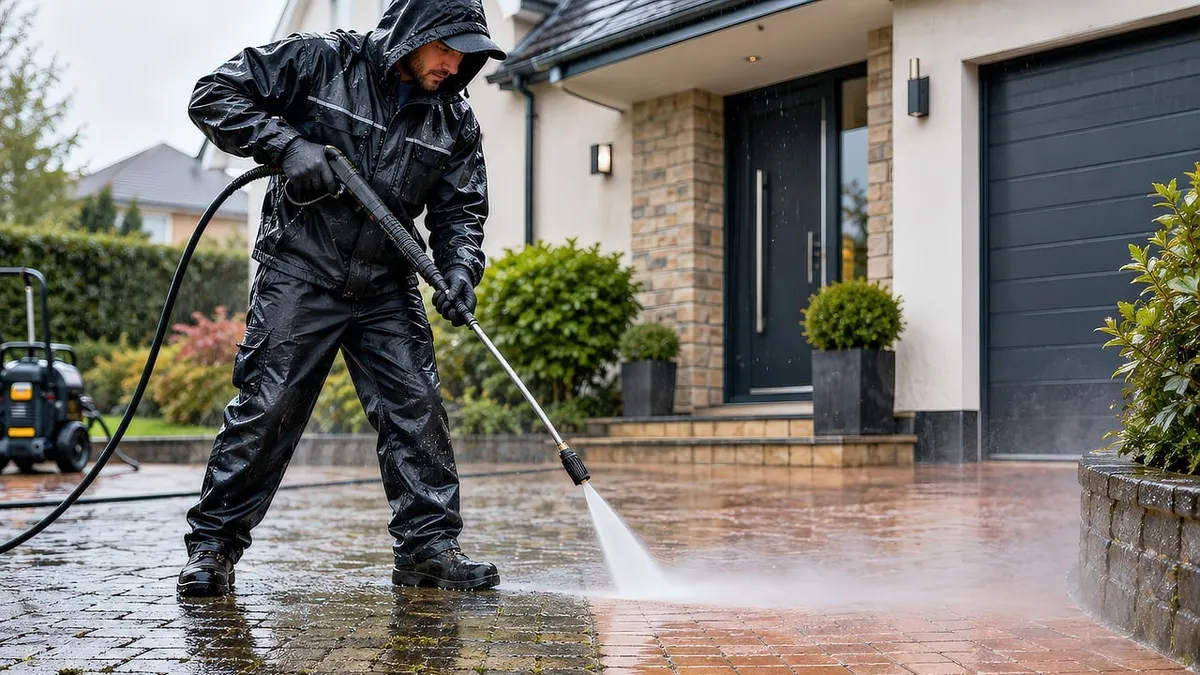
Paver Sealer Peeling or Flaking: Causes and Fix
Peeling or flaking paver sealer almost always traces to one of five causes: over-application without enough cure time, a damp surface at the time of sealing, an ongoing moisture or efflorescence source under the pavers, an incompatible old coating, or skipped cleaning before sealing. The fix in every case starts the same way — strip the failed film — then addresses the specific cause before resealing.
Key takeaways
- Over-thick or too-frequent coats can make a sealer film lose the microporosity it needs to let moisture vapor pass through, which can lead to peeling.
- Sealing a surface that isn’t fully dry is a documented cause of film failure — the same moisture mechanism that causes white haze can also cause peeling.
- Applying new sealer over an old, unknown, or incompatible coating is a known failure cause; manufacturer instructions require stripping it first.
- No source ranks these causes by how common they are — don’t trust a claim that one specific cause is “the most common.”
- Sealer strippers give off strong fumes. Ventilation and skin/eye protection are not optional.
Why does sealer peel or flake in the first place?
A sealer film fails when it loses its grip on the paver surface or on the layer underneath it. The Interlocking Concrete Pavement Institute (ICPI) describes the underlying mechanism for sealer whitening in its technical bulletin, and the same conditions that cause whitening can also cause the film to lift and separate, depending on how much moisture gets trapped and how thick the film is: “the sealer or liquid stabilizer may whiten under any one of these conditions: the surface and joints are not dry; the pavers have not had an adequate period of exposure to moisture; there is a source of efflorescence under the pavers… moving through the joint sand and/or pavers; the sealer is not breathable.” ICPI doesn’t use the word “peeling” directly, but the physical process — moisture pushing up against the underside of a film that can’t let it escape — is the same one that causes adhesion failure in coatings generally.
Separately, manufacturer instructions point to over-application as its own failure path. Techniseal’s Natural Look (iN) Protector data sheet, which we read in full, specifies “generally only one coat is required” for proper thin application, warns that “an over-accumulation of product could make dust stick onto the surface,” and instructs waiting a minimum of 2 years before recoating — specifically, “wait until surface is no longer water-repellent before recoating.” Applying sealer too thick, or recoating before the existing film has worn down, builds up a film that loses the microporosity it needs to breathe, which can show up as whitening and, eventually, peeling.
The five causes, matched to the fix
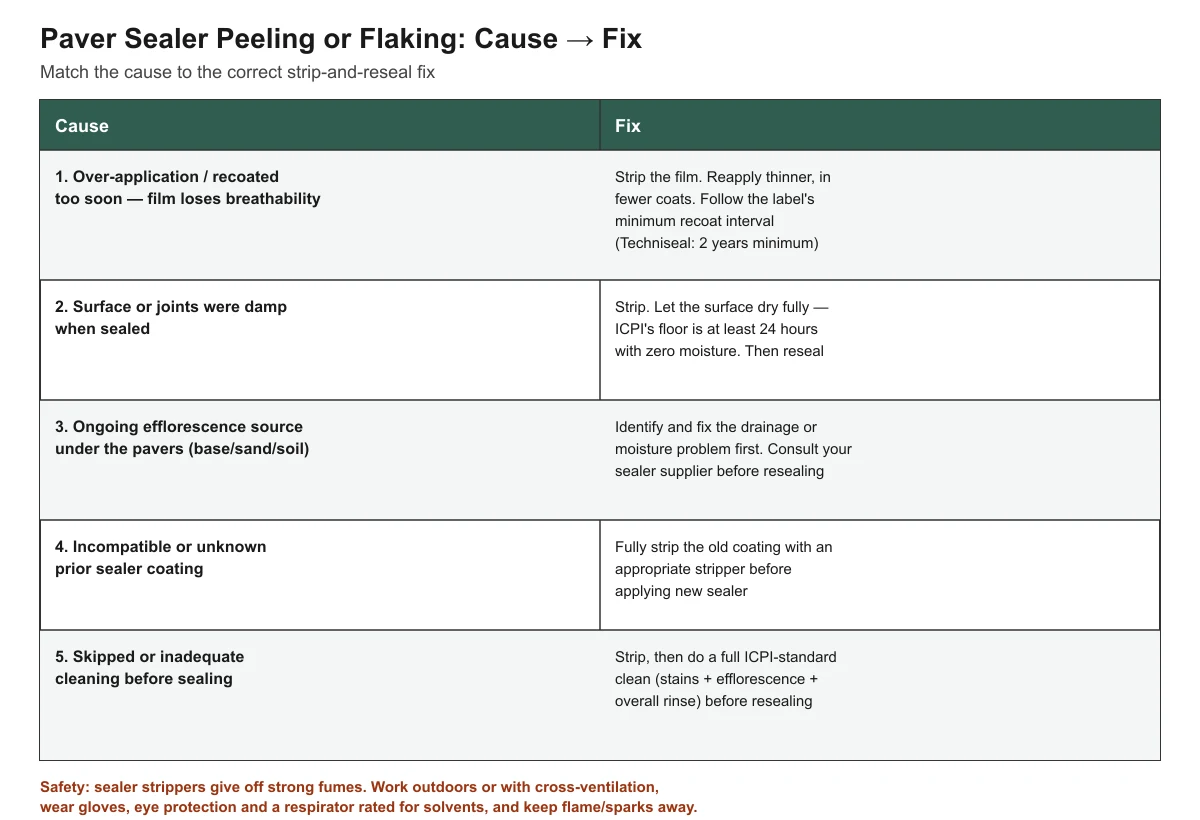
| Cause | Fix |
|---|---|
| Over-application or recoating too soon, film loses breathability | Strip and reapply thinner, in fewer coats. Follow the manufacturer’s minimum recoat interval (Techniseal specifies 2 years minimum). |
| Surface or joints were damp or had inadequate dry time before sealing | Strip, let the surface fully dry (ICPI’s floor: at least 24 hours with zero moisture or dampness), then reseal. |
| Ongoing efflorescence or moisture source beneath the pavers | Identify and address the drainage or base-moisture problem before resealing; ICPI recommends consulting your sealer supplier for this situation. |
| Incompatible or unknown prior sealer/coating | Fully strip the old coating with an appropriate stripper before resealing — Techniseal’s own instructions require this. |
| Skipped or inadequate cleaning before sealing | Strip, then do a full ICPI-standard clean (stain removal, efflorescence removal, overall rinse) before resealing. |
How to tell which cause applies to you
- Check the pattern. Peeling that’s spread evenly across the whole surface points toward over-application or a breathability problem. Peeling concentrated in low spots or near planters and lawn edges points toward a moisture or drainage source underneath.
- Check your sealing history. If you recoated sooner than your product’s minimum interval, or added more than the recommended number of coats, over-application is the likely cause.
- Check what was there before. If you sealed over an existing coating without confirming what it was or stripping it first, incompatibility is a strong candidate.
- Check your cleaning step. If you skipped stain and efflorescence removal, or sealed right after a quick rinse instead of a full clean, inadequate cleaning may be the cause. See our guide to cleaning pavers before sealing for the full ICPI-based process.
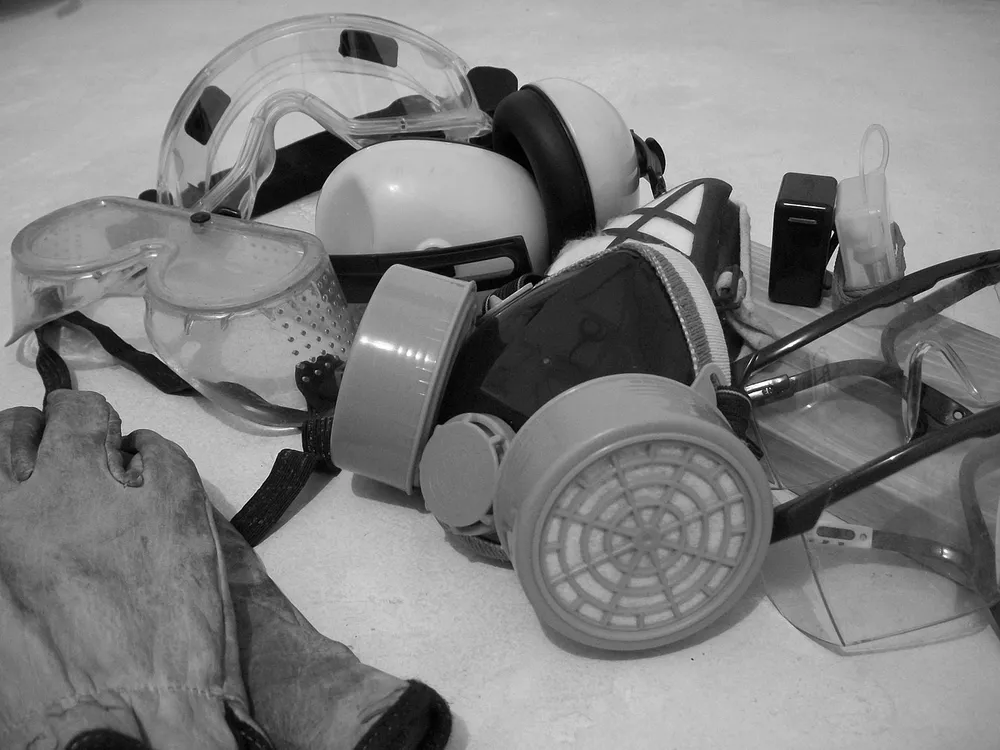
Safety note: sealer-stripper fumes and ventilation
Stripping an old sealer film typically means using a chemical stripper, and often a solvent-based sealer for the reseal. ICPI’s safety guidance applies directly here: for sealers and strippers with VOC content, wear the protective clothing and the mask or respirator recommended by the manufacturer’s label to protect your lungs and eyes. Never use solvent-based strippers or sealers in a poorly ventilated or confined area — work outdoors or with real cross-ventilation. Keep flame and sparks away from the work area while product is wet and until all vapors have cleared. These precautions apply whether you’re stripping a small patio section or a full driveway.
The strip-and-reseal process, step by step
- Confirm which cause (or causes) applied, using the checklist above.
- Apply a sealer stripper rated for your paver material and existing coating type, following its label instructions and safety precautions.
- Rinse thoroughly and let the surface dry completely — at least 24 hours with zero moisture, per ICPI’s minimum floor.
- If moisture or drainage was the underlying cause, fix that problem now, before resealing. A new coat of sealer will not solve a drainage issue.
- Do a full clean: remove stains, remove efflorescence, then rinse the overall surface, working from the bottom of any slope upward so you can see remaining dirty spots as you go.
- Reapply sealer in the thin, correctly-timed application your product’s data sheet specifies — usually one coat, applied within a defined temperature range and with a wet edge to avoid lap marks.
What about the finish type — does it affect peeling risk?
Different sealer finishes (flat, gloss, semi-gloss) have different sand-stabilizing and color-enhancing properties, but the peeling causes above apply across finish types — the problem is moisture, application thickness, compatibility, or cleaning, not the gloss level itself. If you’re choosing a new sealer after stripping a failed one, see our neutral comparison of wet look vs natural vs enhancer paver sealer to pick the right finish for your situation.
Where this fits into the full process
If you’re starting fresh after a strip, our complete step-by-step guide to sealing pavers covers cleaning, drying, application technique, and cure times in full. And if what you’re actually seeing is white cloudiness rather than lifting or flaking film, check white haze on pavers after sealing first — the two problems share a cause but look different and may need a different fix.
Frequently asked questions
Do I always have to strip the old sealer before fixing peeling?
Yes, in all five cases above. A peeling or flaking film has already failed to bond properly; adding a new coat on top of it does not fix the underlying adhesion problem and can make the surface look worse.
Can I use a pressure washer instead of a chemical stripper?
Pressure washing can help remove loose, already-flaking material and general dirt, but ICPI’s own cleaning guidance distinguishes general cleaning from sealer removal — a true sealer stripper, not just water pressure, is typically needed to fully remove a bonded film before resealing. Check your stripper’s label for any pressure-washing instructions specific to that product.
How long does peeling take to show up after sealing?
No source in our research gives a specific timeline for when peeling appears after a flawed application — it can vary with the cause, the climate, and the sealer. If you notice any lifting or flaking at all, treat it as a sign to investigate rather than waiting to see if it spreads.
Is peeling sealer a sign I need to replace my pavers?
No. Peeling is a coating problem, not a structural one. ICPI notes that efflorescence and related surface issues do not affect the structural performance or durability of the concrete pavers themselves.
What causes blushing or whitening right after I notice peeling starting?
Whitening and peeling can share the same root cause — trapped moisture under a non-breathable or too-thick film. If you see whitening appear before or alongside flaking, treat the moisture-related causes in the table above as your starting point.
Sources
- Interlocking Concrete Pavement Institute, Tech Spec 5: Cleaning, Sealing and Joint Sand Stabilization of Interlocking Concrete Pavement
- Techniseal, Natural Look (iN) Protector Technical Data Sheet
By paversealguide.com Editorial Team. Last updated: 2026-11-13.

One thought on “Paver Sealer Peeling or Flaking: Causes and Fix”