How Often Should You Seal Pavers?
There is no single “reseal every X years” number — sealer manufacturers give ranges of roughly 2 to 5 years depending on sealer type, traffic, and climate, and even they decline to give one fixed figure. The reliable way to know if your pavers are due is a simple water-bead test: splash water on the surface, and if it soaks in instead of beading up, it’s time to reseal.
- Key takeaways
- No manufacturer publishes one universal resealing interval — published ranges span about 2 to 5 years.
- Water-based penetrating sealers may need at least 2 years before even being eligible for a recoat, per one manufacturer’s own instructions.
- Traffic and climate change how fast a sealer wears — a driveway wears faster than a planter border.
- A DIY water-bead test, adapted from the absorption checks sealer makers use, tells you directly whether your current sealer is still working.
- Don’t trust a blog that gives one specific number “no exceptions” — the sourced data doesn’t support that kind of certainty.
Why Isn’t There One Fixed Resealing Schedule?
Every manufacturer that publishes a figure gives a range, not a number, because resealing frequency depends on three things at once: the sealer’s own chemistry, how much foot or vehicle traffic the surface gets, and how much sun, rain, and freeze-thaw cycling it’s exposed to. The Interlocking Concrete Pavement Institute puts it plainly in its technical guidance: “Sealers normally require reapplication after a period of wear and weather. The period of reapplication will depend on the use, climate, and quality of the sealer” — and it does not attach a specific number to that statement.
Here’s what the real, sourced numbers look like:
- DryTreat Stain-Proof (water-based, penetrating): lasts “approximately up to 5 years depending on surface use and traffic,” per its own product spec sheet.
- Techniseal iN Protector (water-based, penetrating): instructs not to recoat until the surface is no longer water-repellent, and sets a 2-year minimum before that check even applies.
- ICPI (neutral, non-seller source): declines to give a number at all, citing use, climate, and sealer quality as the real variables.
If you want to see these same numbers in the context of choosing a sealer in the first place, including VOC and climate tradeoffs between water-based and solvent-based formulas, see water-based vs solvent-based paver sealer.
What Actually Speeds Up or Slows Down Resealing?
Two factors do most of the work, even without a published matrix to quantify them precisely:
Traffic. A driveway that sees daily car tires, especially turning and braking, wears sealer faster than a seating-area patio that mostly sees foot traffic. Garage aprons and turnaround spots typically wear fastest of all.
Climate and water exposure. Sealers that sit under standing water, get regular freeze-thaw cycling, or face intense UV exposure break down faster than sealer in a shaded, well-drained spot. A sealer on a sloped driveway in a rainy climate is doing more work than the same product on a covered porch.
Because these factors compound differently for every property, a generic “material × traffic × climate” table would have to invent numbers no manufacturer has actually published — which is exactly the kind of fabricated precision this site avoids. The honest, useful version of this answer is the test below.
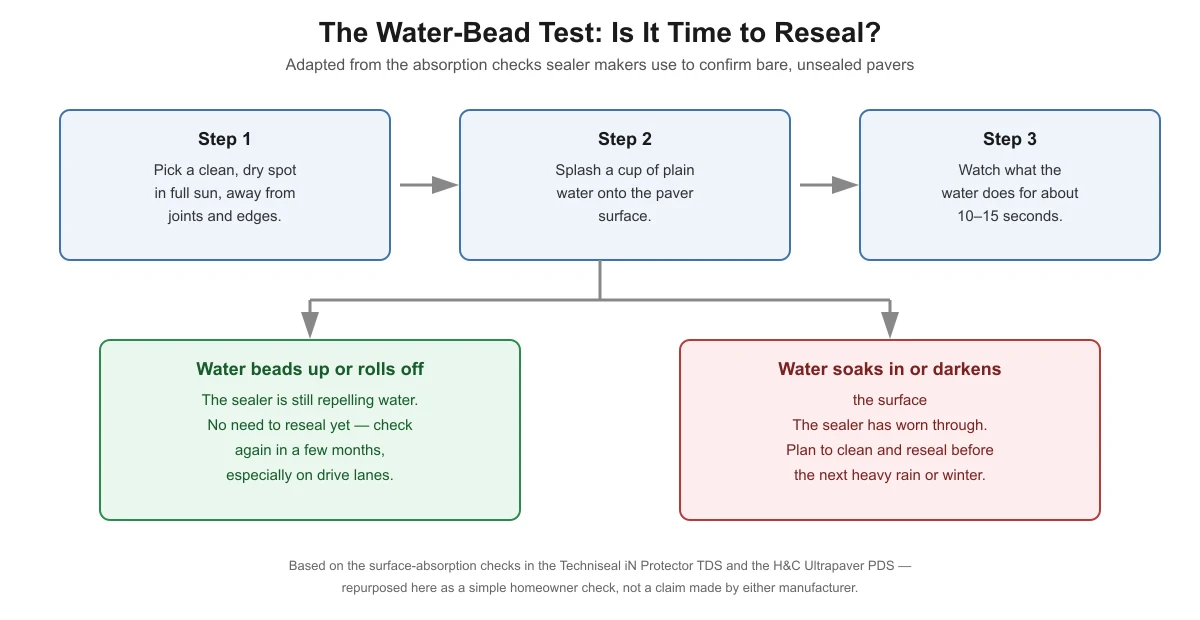
The DIY Water-Bead Test: Is It Time to Reseal?
This test is adapted from the same absorption checks sealer manufacturers use to confirm a surface is bare and ready for a first application — repurposed here as a simple way to check whether an existing sealer is still active.
- Pick a spot that’s clean, dry, and in full sun, away from joints and shaded edges.
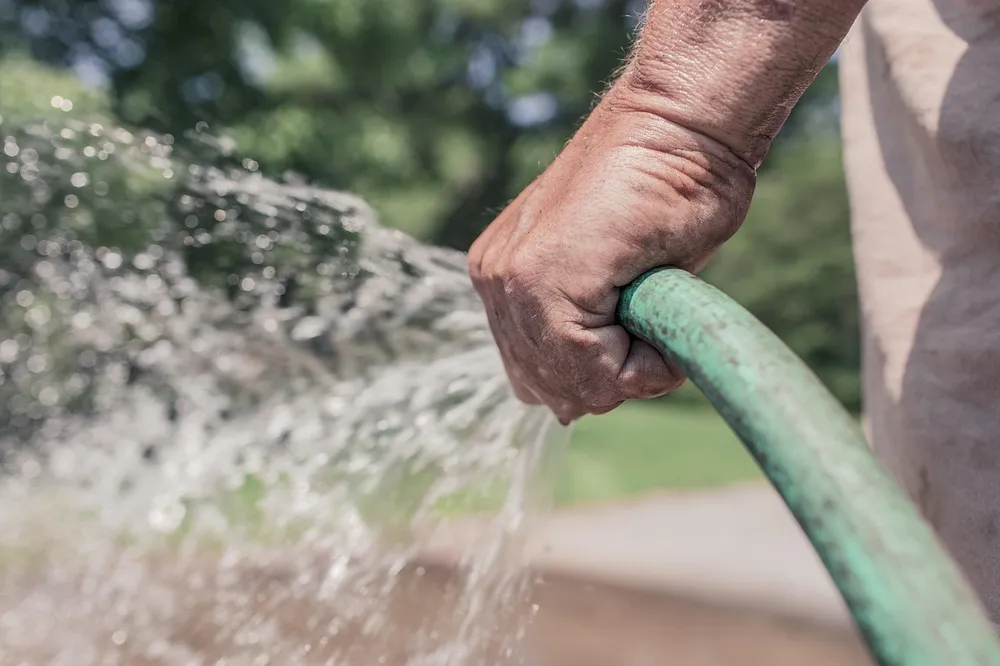
- Splash a cup of plain water onto the paver surface.
- Watch for 10 to 15 seconds. If the water beads up or rolls off, the sealer is still repelling water and doing its job. If it soaks in or visibly darkens the paver, the sealer has worn through in that spot.
Test two or three spots, including at least one high-traffic area like a driveway lane or main walkway, since sealer wears unevenly. If most spots still bead water, you can wait. If most spots absorb it, plan to clean and reseal before the next heavy rain or winter freeze.
Safety note: If the test shows your sealer has worn through and you’re planning to reseal, work in a ventilated area and wear gloves and eye protection while cleaning and applying new sealer, especially if you choose a solvent-based product. (Source: ICPI Tech Spec 5)
Does Climate Change the Answer?
Climate affects resealing frequency, even without a published number to attach to it. In colder regions, repeated freeze-thaw cycling pushes water into tiny cracks in a worn sealer film and can accelerate breakdown, especially on driveways where de-icing salt also plays a role. In hot, sunny climates, UV exposure breaks down the polymers in a sealer film over time, which is one reason south- and west-facing surfaces often show wear sooner than shaded ones on the same property.
Coastal and humid climates add another variable: water-based sealers cure more slowly as humidity rises, and surfaces that stay damp longer after rain give any trapped moisture more time to cause problems under the film. None of this changes the core advice — test rather than guess — but it explains why two identical-looking patios in different states can be due for resealing at very different times.
What If the Pavers Were Just Installed?
If your pavers are brand new, the question isn’t how often to reseal yet — it’s how long to wait before the very first sealing. New concrete pavers and fresh polymeric sand both need their own cure time before any sealer goes on, and the numbers differ by sealer type. See how long to wait before sealing new pavers for the specific, sourced wait times.
For the full cleaning, dry-testing, and application process once you do seal, start with the complete step-by-step paver sealing guide.
Frequently Asked Questions
Is it bad to reseal pavers too often?
Yes — at least one manufacturer’s own instructions warn against recoating too soon. Techniseal’s iN Protector data sheet sets a 2-year minimum before even checking if a recoat is due, because building up too much sealer film can trap moisture and cause whitening or peeling later.
Does a darker paver color mean the sealer is wearing off?
Not necessarily by itself — color can also change slightly from dirt buildup or UV fading. The water-bead test is a more direct check, since it tests the sealer’s actual water-repelling function rather than color alone.
Do shaded pavers need resealing less often than sunny ones?
Generally, less UV exposure means less sealer breakdown from sunlight, but a shaded area that stays damp longer after rain can wear a sealer down through moisture exposure instead. Test both sunny and shaded spots separately rather than assuming one rule for the whole surface.
Can I just add a new coat over the old sealer without stripping it?
Often yes, if the old sealer is the same product or a compatible one and the surface passes the water-bead test as “worn but not damaged.” If the old sealer is unknown, incompatible, or already peeling, stripping first is usually required — see paver sealer peeling or flaking for that situation.
Sources
- Interlocking Concrete Pavement Institute, Tech Spec 5: Cleaning, Sealing and Joint Sand Stabilization of Interlocking Concrete Pavement (1995, revised 2004)
- DryTreat, Stain-Proof Waterbased Penetrating Sealer Product Specification Sheet (Rev. 12.25)
- Techniseal, Natural Look (iN) Protector Technical Data Sheet (March 2023)
- H&C Concrete, Ultrapaver Solvent-Based Florida Paver Sealer Product Data Sheet (Rev. 4/16)
paversealguide.com Editorial Team. Last updated: November 13, 2026.