White Haze on Pavers After Sealing: Causes & Fix
White haze on pavers after sealing almost always has one of two causes: efflorescence rising from inside the paver or base (not a sealer defect at all), or moisture trapped under the sealer film because the surface wasn’t dry, the base drains poorly, or the sealer isn’t breathable. Telling them apart decides whether you need to do nothing, or strip and redo the sealer.
- Key takeaways
- Efflorescence is a whitish, powdery mineral deposit that forms as concrete cures — it can appear with or without any sealer involved.
- Trapped-moisture sealer whitening shows up as cloudiness within the sealer film itself, not loose powder on top.
- Efflorescence often peaks around 60 days after installation and can linger for months before weathering away.
- Trapped-moisture whitening requires removing or re-dissolving the sealer — it won’t just wear off like efflorescence can.
- No source ranks one of these causes as “most common” — treat both as real possibilities until you check which one you have.
Cause 1: Efflorescence (Not a Sealer Problem)
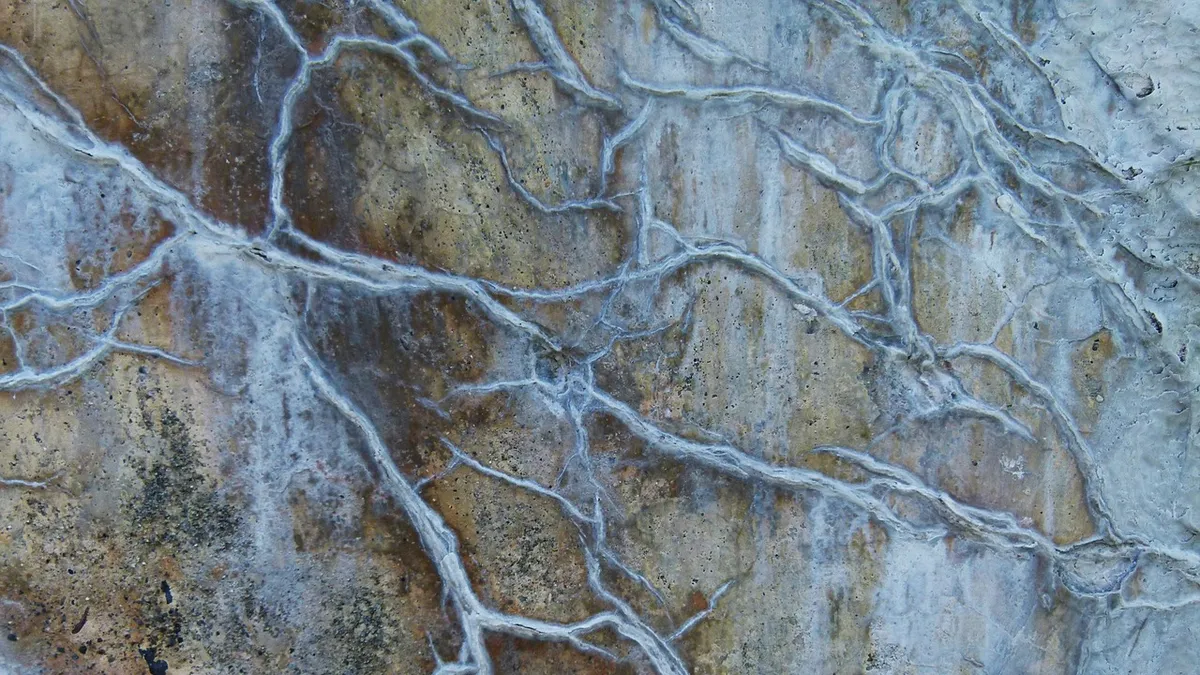
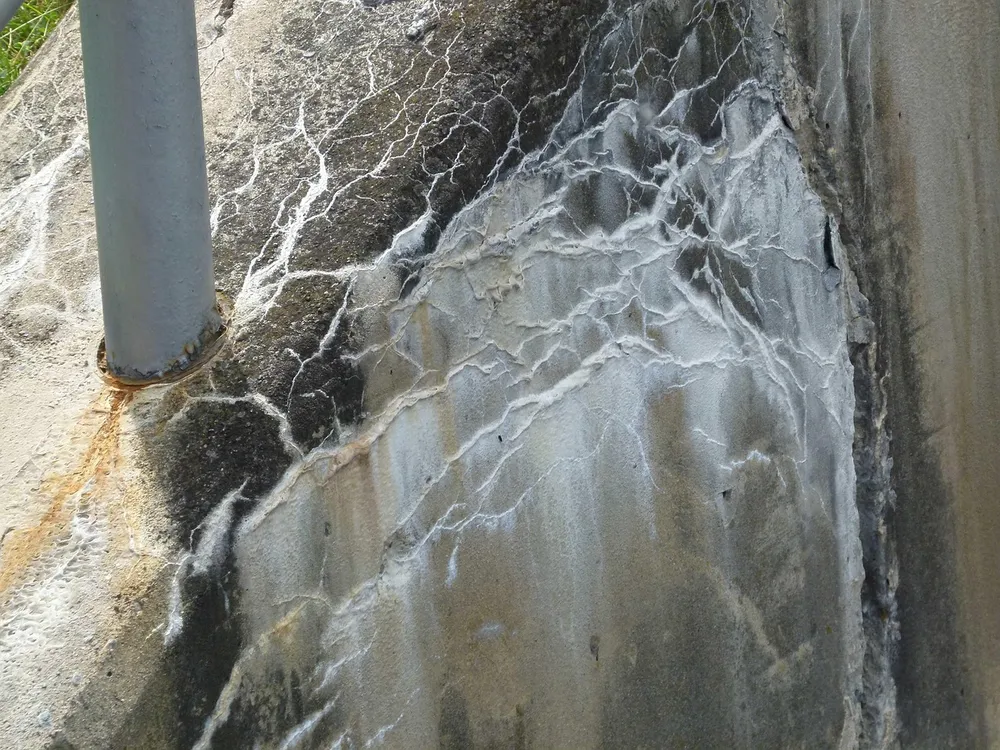
Efflorescence is a whitish, powder-like deposit that can appear on any concrete product, sealed or not. The Interlocking Concrete Pavement Institute explains the mechanism directly: when cement hydrates, it forms calcium hydroxide, which is soluble in water and migrates by capillary action to the surface. There, it reacts with carbon dioxide in the air to form calcium carbonate — the white deposit you see.
ICPI notes efflorescence “does not affect the structural performance or durability of concrete pavers.” It may show up immediately or not for months, often peaking around 60 days after installation, and can remain for a while before gradually weathering away on its own.
Techniseal’s own iN Protector data sheet confirms the same point from the sealer side: “Any new concrete product has the potential to produce efflorescence… This Protector will not trap efflorescence, which will disappear by itself after prolonged exposure to weathering.”
How to fix it: apply a proprietary, buffered efflorescence remover in sections, starting at the top of any slope. Let it dry at least 24 hours, then check results and repeat if the efflorescence is severe.
Cause 2: Trapped-Moisture Sealer Whitening
This is a different problem that looks similar at first glance: cloudiness that appears to live inside the sealer film itself, rather than sitting as loose powder on the surface. ICPI’s sealing-procedures guidance lists the specific conditions that cause it, almost word for word: the surface and joints weren’t dry, the pavers didn’t get an adequate period of exposure to moisture before sealing, there’s an ongoing source of efflorescence underneath moving up through the sand or pavers, or the sealer itself isn’t breathable — meaning it doesn’t let moisture pass through and evaporate.
ICPI adds a specific warning: if the base drains poorly, the sealer gets applied over saturated joint sand, or it’s applied too thick, the sealer can turn cloudy and dull the pavers’ appearance. In that situation, “the sealer must be removed or re-dissolved” — consulting the sealer supplier for the right approach. Techniseal’s own instructions back this up from the product side, directly warning: “Do not apply this product over a blotchy or hazed surface.”
How to fix it: the sealer has to come off or be re-dissolved — it won’t wear away on its own the way efflorescence can. Identify and fix any underlying drainage problem first, make sure the surface is genuinely dry (see the test below), then reseal.
Telling Them Apart
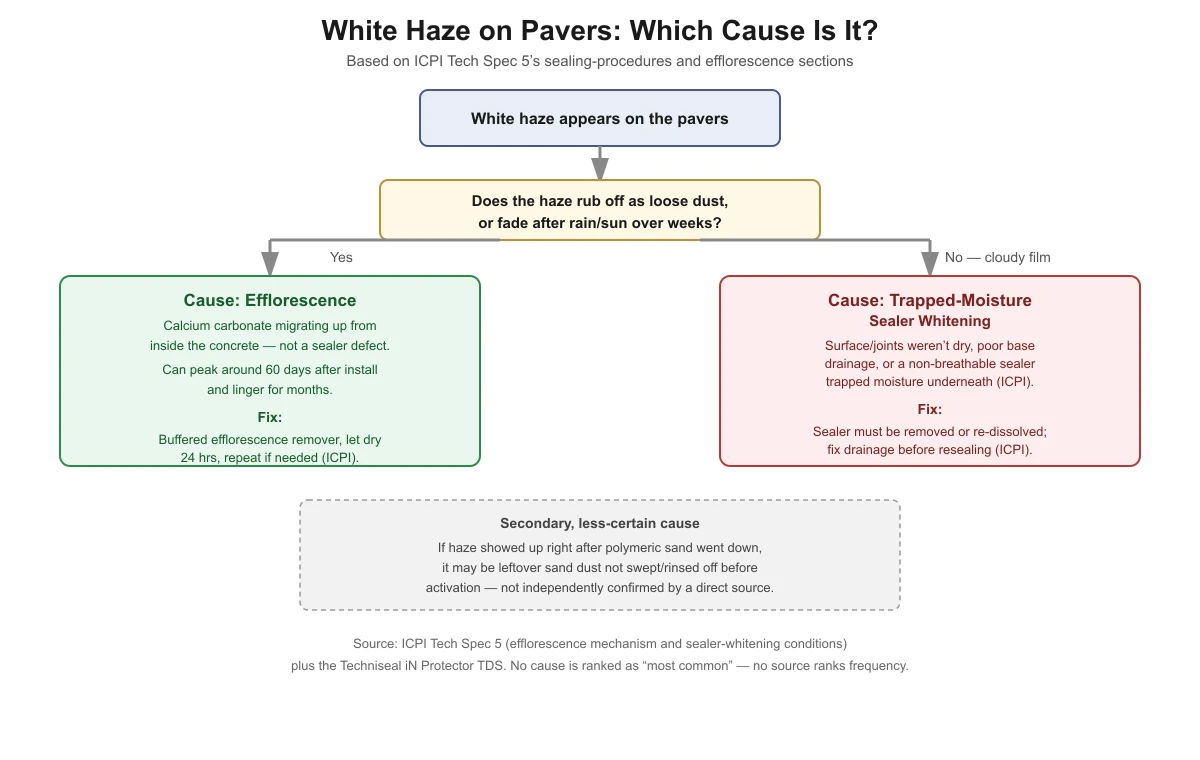
A simple physical check separates the two in most cases: efflorescence is loose, powdery, and sits on top of the surface — it will often smear, rub off partially onto a dry cloth, or visibly fade after a few rain cycles and sun exposure. Trapped-moisture whitening is cloudiness you see within the sealer film itself; wiping the surface doesn’t remove it because it isn’t sitting on top, it’s inside the coating.
A Less-Certain Third Possibility: Polymeric Sand Residue
One polymeric sand manufacturer, SEK-Surebond’s Techo-Bloc PolySweep line, markets a “haze-free” formulation and states plainly that its product “will not discolor the surface or leave behind a haze.” That marketing claim implies, by its own framing, that some older or ordinary polymeric sand formulations can leave a haze behind — most likely from excess dry sand dust that wasn’t fully swept and rinsed off the paver surface before the sand was activated with water.
We could not find a source that confirms the exact mechanism in detail, so treat this as a secondary, less-certain possibility rather than a confirmed third cause on the same footing as efflorescence or trapped moisture. If your haze appeared specifically right after installing fresh polymeric sand — rather than weeks after sealing — it’s worth rinsing the surface again and checking whether the residue wipes away before assuming it’s efflorescence or a sealer failure.
If weeds or loose joint sand are also an issue on the same surface, see how to stop weeds between pavers for the full polymeric sand installation and activation process.
Before You Reseal, Clean It Right
Whether the cause turns out to be efflorescence or trapped moisture, any fix that involves resealing starts with a proper clean. Skipping or rushing this step is itself a documented cause of future sealer problems. See how to clean pavers before sealing for the homeowner-scale process, including how to confirm the surface is actually dry before sealer goes back on.
If the sealer is also lifting, bubbling, or flaking rather than just looking hazy, that’s a related but distinct problem — see paver sealer peeling or flaking for that cause checklist. For the full sealing process from a clean start, see how to seal pavers: the complete guide.
Safety note: Efflorescence removers and sealer strippers both involve chemicals that need ventilation. Wear gloves and eye protection, keep the work area ventilated, and never apply or strip solvent-based products in an enclosed space. Never mix chlorine bleach with vinegar or ammonia-based cleaners — this combination produces dangerous fumes. (Source: ICPI Tech Spec 5)
Frequently Asked Questions
Will efflorescence come back after I remove it?
It can, especially if the underlying moisture source in the base or soil hasn’t changed. ICPI notes efflorescence may need to be treated more than once as the concrete continues curing, particularly within the first year or so after installation.
Can I just reseal over a hazy sealer instead of stripping it?
Manufacturer instructions generally say no — Techniseal’s own data sheet specifically warns against applying new sealer over a blotchy or hazed surface. The trapped moisture causing the haze needs to be addressed and the old sealer removed or re-dissolved first.
Does pressure washing remove white haze?
It can remove loose efflorescence powder sitting on the surface, but it will not fix trapped-moisture whitening living inside the sealer film — that requires the sealer itself to be stripped or re-dissolved, not just washed.
How long after sealing should I wait before deciding haze is a real problem?
Since efflorescence can take weeks to peak and then fade over additional weeks to months, give it some time before assuming the worst. If the haze is clearly inside the sealer film (cloudy, not powdery) rather than sitting on top, that points to a trapped-moisture problem that won’t resolve on its own.
Sources
- Interlocking Concrete Pavement Institute, Tech Spec 5: Cleaning, Sealing and Joint Sand Stabilization of Interlocking Concrete Pavement (1995, revised 2004)
- Techniseal, Natural Look (iN) Protector Technical Data Sheet (March 2023)
- SEK-Surebond / Techo-Bloc, PolySweep Superior Strength Polymeric Sand Technical Data Sheet
paversealguide.com Editorial Team. Last updated: November 13, 2026.

Related Posts
Wet Look vs Natural vs Enhancer Paver Sealer

How Often Should You Seal Pavers?